Paphos Old Town Food Guide: How to Eat Beyond the Tourist Harbor
So you've arrived in Paphos, Cyprus. Immediately, you're smitten with the sun-drenched coastal views, the ancient ruins, and the bustling Kato Paphos Harbor. At this point, most tourists stick to the harbor promenade, where the tavernas with incredible sea views often serve overpriced, generic "tourist meze" (think frozen calamari, simple kebabs, and bland dips).
The quickest solution is to go up the hill and head for Paphos Old Town (Ktima). This is the historic beating heart of the city, where independent family kitchens, traditional bakeries, and neighborhood grill spots serve authentic Cypriot food.
In this Paphos Old Town food guide, we'll break down why Old Town is a culinary hotspot, what types of venues to look for, and the easiest way to navigate its hidden alleyways.
Harbor vs. Old Town: What's the Difference?
Kato Paphos is the harbor area, built for high-volume tourism. It's beautiful for walking, souvenir shopping, Ayiou Antoniou Street's night life, and Alykes Beach. But many eateries in this area prioritize turn-and-burn crowds over slow, authentic cooking.
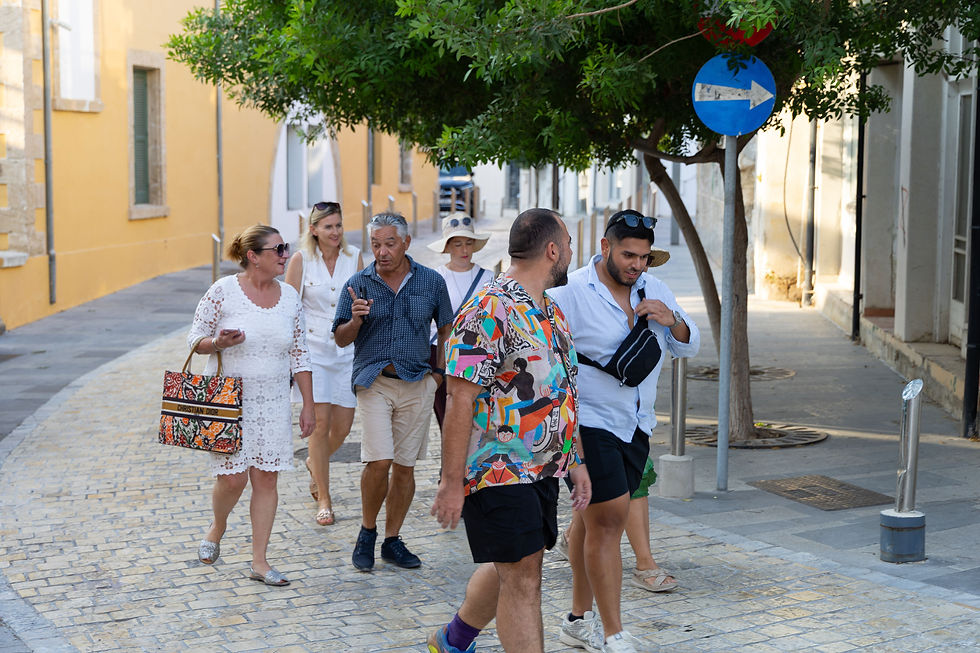
Ktima, the Paphos Old Town, is the reinvigorated historic district a few kilometers up the hill from the harbor. Perched on a sandstone cliff overlooking the sea, you can get to Old Town in 10-15 minutes by car, taxi, or bus. Once here, you'll quickly realize this is where Paphos lives, breathes, and cooks. You will find cobblestone streets full of artisan shops, street art, and generational family eateries full of locals.
What to Look For: Paphos Old Town Food Guide & Culinary Highlights
-Traditional Bakeries (Fournoi)
If you walk the streets of Ktima in either the early morning or late afternoon, you'll be bombarded by the aromas of baking dough and warm spices filling the street. If it captures your attention, step into one of the fournoi and grab what looks good. Freshly baked pastries, sesame-encrusted breads, and traditional sweet snacks like pastellaki and kouppes are served warm, right out of the oven.
-Family-Run Tavernas & Grill Houses (Psistaries)
You will find the family-run tavernas of Paphos, called psistaries, tucked away in courtyards with vine-shaded tables and open charcoal pits. On the grill will be sizzling skewers called souvlaki, house-made Cypriot sausages called sheftalia, and slow-cooked meat specialties prepared using recipes passed down through generations.

Artisan Cured Meat & Cheese Shops
All throughout the historic center of Paphos are these small delis and market stalls selling traditionally cured meats and artisan cheeses. Some of the cured meats of Cyprus are recipes passed down from the Troodos Mountains, using local wines like Hiromeri and Lountza for preservation. Some meats are ancient dried specialties like tsamarella. The most popular local cheese is anari, served drizzled with native carob honey.
Traditional Sweet Spots & Local Spirits
These little shops are relaxed neighborhood gathering spots where you can find locals enjoying coffee, sweets, and conversation. Here's the perfect location for ice-cold rosewater puddings (mahalepi), honey-soaked pastries (loukoumades), and a shot of ice-cold Zivania, Cyprus's official spirit of choice, all to close out a day of eating.
The Easiest Way to Find Where to Eat with FoodaQuest
Paphos Old Town's best spots are often hidden behind unmarked doors or down side alleyways that most visitors will walk right past. The best way to make sure nothing is missed is to have a local guide, somebody that not only knows where to go but also the stories behind each dish and the history of everything around you.
When you book the Paphos Old Town Cypriot Food Tour with Local Tastings, FoodaQuest unlocks the secrets of Ktima for you. No guesswork necessary: follow a local who knows exactly which family kitchen makes the best skewers and which bakery has the freshest pastries.
The food tour will take you to 6 (or more) stops, giving you the opportunity to try pastries, grills, wine-cured meats, local drinks, and traditional desserts. And instead of just staring at a menu, the local guide connects each dish to the island's history, local legends, and daily Cypriot culture.
Let a local show you the way.